by Jasper Moore
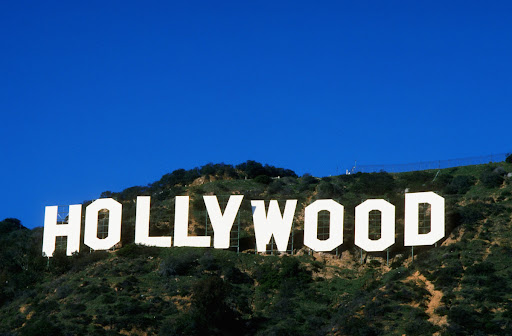
Los Angeles has been involved with the entertainment industry for well over a century, with LA’s earliest film productions dating back to 1897. Since then, Los Angeles has become a perpetual fixture of cultural relevance in western media with LA seemingly being frozen in a technicolor still of its Hollywood’s Golden Age, to the rest of the world. This image still remains associated with Los Angeles, though the city has experienced undeniable change over the past 125 years. Surprisingly, the birth of what we now call the “Golden Age” of Hollywood (of which affected both the geographical area of Hollywood, Los Angeles and the 1000+ American films released during 1913-1969) materialized under dire situations. After the Great Depression hit in 1929, the U.S. at large began to rapidly shift for better, or for worse, and so did the young Hollywood film industry along with it.
After the infamous stock market crash occurred on October 24, 1929, the Great Depression flooded Americans in a sea of hardships that drowned the public of financial stability. The depression’s effects only worsened throughout its duration, as the national unemployment rate reached as high as 25% in 1933. This mass amount of unemployment meant a large sum of Americans possessed both more free time in their daily schedules and very little money to spend. Although one might think Americans would avoid such a luxury like the cinema during this time, theaters implemented unconventional efforts to ensure citizens were seated within their theaters.
Escapism is such a common state of being nowadays that its previously negative connotations have almost entirely dissipated, and since has been replaced with the overarching term of entertainment. The facade of entertainment allows one to ignore the possibility of being swallowed whole by their problems, just by simply gripping onto the branches of distraction. This has not only kept most of the general public afloat amidst unpredictable periods in modern history, but as Nicole Kidman states before every showing at AMC, the cinematic form of escapism also allows audiences to, “not just (be) entertained, but somehow reborn.”
The business of distraction was proven lucrative during the Great Depression (from 1929-1941). When the 1920s roared, the rise of the cinema began to precipitate rapidly, with major studios having had over 23,000 theaters nationally by 1928. Once the depression had financially burdened most Americans, small, locally-owned theaters began to shut down across the country at an alarming rate. Film historian Kathryn Fuller-Seeley suggests in an excerpt from Ink Stained Hollywood by Eric Hoyt, that by 1932, “about 8,000 of the nation’s 23,000 movie theaters were closed.” Without the backing from major studios, smaller theaters brought in crowds by offering new amenities along with their reduced ticket prices. Such additions included the introduction of “dish nights” which served movie-goers meals free of charge, and “bank nights” which offered a raffle of a considerable cash prize on select nights to patrons of the theaters.
The major studios during this time, who did not face the same financial conditions as independent theaters, began increasing their theatrical offerings during the depression. This created an unfair balance between locally-owned cinemas and those backed up by corporations and eventually created a monopoly of sorts. This was eventually investigated by the federal government in the trial of Paramount Pictures v The United States and as a result, all major studios were forced to end their private ownership of cinemas in order to keep their rights to privately produce their own films.
Cumulatively, all five of the leading studios of the period (MGM, Paramount Pictures, 20th Century Fox, Warner Brothers, and RKO) produced 90% of the films distributed during the depression. Together all five studios had inflated the average number of films distributed per year from 500 (in 1915-1919) to an average of 800 during the 1920’s-30’s. Today, studios currently distribute an average of 500 films per year across cinemas nationwide. Because of the amplified production of films during this period, the innovations made during film’s inventions, technological advancements began to influence the way stories were told on film, such as the invention of technicolor. As a result of these innovations, audiences have cinematic classics such as The Wizard of Oz, Gone With The Wind, The Grapes of Wrath, King Kong, Citizen Kane, and the Universal Studios’ adaptation of Frankenstein.
Although the major studios of the Golden Age were still making some sort of profits, production giants began to suffer like other industries during the depression. The four months leading up to FDR’s inauguration in 1933, the lowest points of the depression occurred. This difficult period caused both Paramount and RKO to enter receivership. After president Franklin D. Roosevelt was sworn into office in 1933, he implemented his infamous bank holiday in March of that year. This holiday closed all national banks temporarily in order to avoid further economic collapse. In response to the aforementioned holiday, studios implemented steep salary cuts of up to 50% for all of their creative workers, due to concerns over the closure of banks. Peculiarly, once banks were inevitably reopened, the depleted salaries of Hollywood’s creatives remained the same. Creative workers within the industry began to believe that the studios’ heads were continuing to pay them unfair wages out of personal greed. As a result of this distrust, creatives across the entertainment industry come together to form their own respective unions. Screenwriter’s organized the first civil union, with the formation of Screen Writers Guild occurring on April 9, 1933. Actors quickly followed suit with the creation of the Screen Actors Guild occurring later within the same year. Since then, almost all creative departments have formed unions in the entertainment industry, such as the Directors Guild of America, and the Producers Guild of America. Each respective union continues to protect their creative workers as well as to provide benefits for their creatives working within the entertainment industry, effectively impacting all people currently working in Hollywood’s productions today. Though dark, the Great Depression helped reshape the relationship between the entertainment industry and its workers, as well as further establishing the western world’s codependency on entertainment through difficult times, and helped transform LA into the entertainment capital of the western world.

 Fusion Lit LA